
Case Studies

Investigations that have been cold for decades often accumulate an incredible amount of information.
Thousands of pages of reports, witness interviews, lab results, photographs, and investigative notes. As detectives change assignments and evidence moves between systems, reconstructing the full story of a case can become as difficult as solving it.
That was the reality in the murder of Rhonda Marie Fisher, a case that remained unsolved for 38 years.
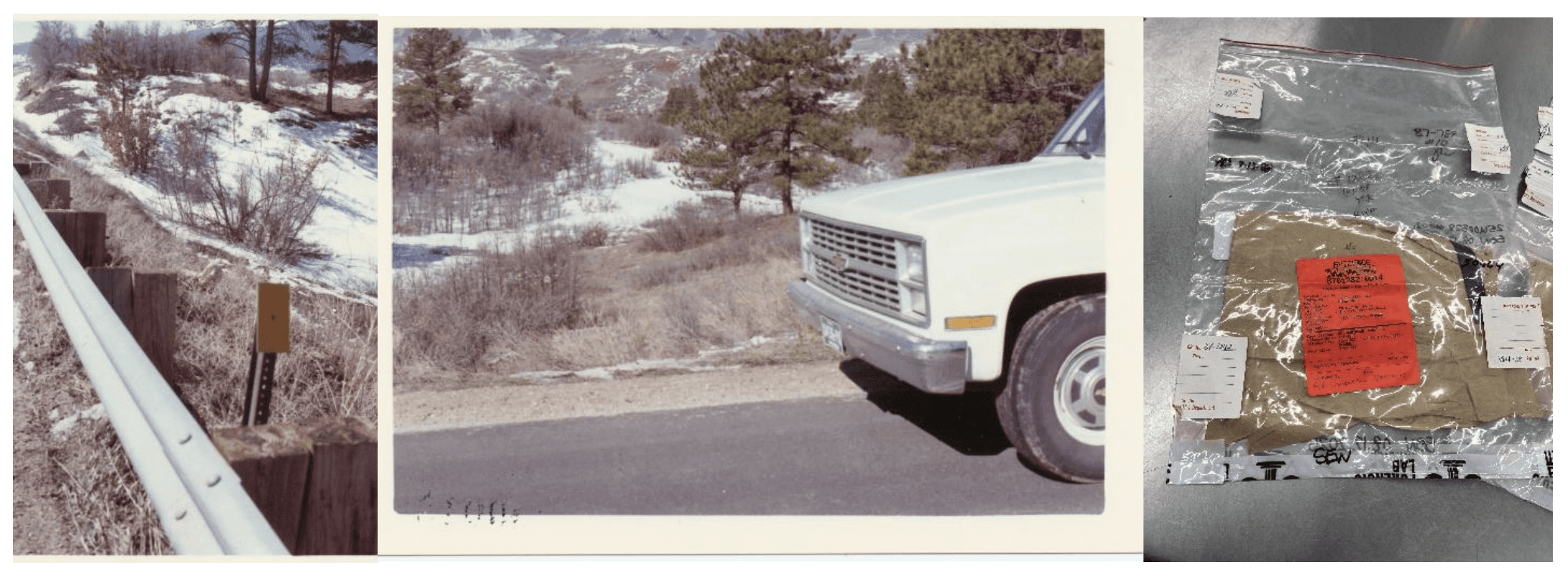
In 1987, Fisher’s body was discovered down an embankment in rural Douglas County, Colorado. She had been sexually assaulted and strangled. Despite an extensive investigation at the time, no suspect was identified and the case eventually went cold.
Nearly four decades later, the perpetrator was finally identified: Vincent Darrell Groves, a serial killer responsible for multiple homicides across the Denver metro area during the 1970s and 1980s.
Groves had died in prison in 1996.
The breakthrough came through a CODIS DNA match, but confirming the case required investigators to review decades of investigative work and connect Fisher’s murder to Groves’s broader pattern of crimes.
To manage that process, analysts and detectives in the Douglas County Sheriff's Office Cold Case Unit used TimePilot to organize and review thousands of pages of case material.
Reviewing Decades of Evidence
When the Cold Case Unit reopened the Fisher investigation in 2024, the case file contained a massive amount of evidence.
These materials included:
Witness interviews and investigative notes
Evidence logs from the original investigation
Lab reports and DNA testing records
Crime scene photographs
Suspect interviews conducted years apart
Like many cold cases, the investigation had passed through multiple detectives over the years. While each detective added new insights, the result was a large body of information spread across different reports and time periods.
Even answering basic questions often required locating and comparing multiple documents.
For example, one suspect connected to the case had given three separate statements over the years, each containing inconsistencies. Identifying those discrepancies meant reviewing interviews conducted years apart and cross-referencing them with investigative reports.
At the same time, analysts were preparing new DNA evidence for testing that could potentially identify the killer. Understanding how that evidence fit into decades of investigative history was critical.
Centralizing the Case in TimePilot
Crime Analyst Supervisor at Douglas County Sheriff's Office, Michele Kennedy uploaded the Fisher case into TimePilot in order to centralize all of the evidence.
With the case organized in one place, the team could locate and analyze information across the entire file. During evidence reviews, they used TimePilot to quickly clarify questions such as:
What DNA testing had been conducted on specific evidence in earlier years?
What investigative activity occurred between 1988 and 2017?
Were there other witnesses that should have been interviewed?
Provide a list of all evidence items.
Having those answers immediately available helped them move the case forward without losing momentum.
"Even if I read the entire file before an evidence review, I wouldn’t retain all of it. It would take weeks just to get through the reports. Being able to ask TimePilot and get the answer in seconds makes a huge difference."
— Michele Kennedy, Douglas County Sheriff's Office
TimePilot was also used to generate concise case summaries that quickly brought new investigators up to speed.
When a detective on the case needed to collect a DNA sample from a suspect in Denver, Michele Kennedy shared a TimePilot-generated summary that provided the full background of the case. The detective was able to proceed immediately with a clear understanding of the investigation.
Connecting the Case to a Serial Killer
In 2025, DNA recovered from the paper bags placed over the victim’s hands at the crime scene to preserve trace evidence produced a CODIS match identifying the suspect as convicted serial killer Vincent Darrell Groves.
Although he had died in prison decades earlier, the Douglas County Sheriff's Office needed to determine how Fisher’s murder fit within his known pattern of crimes.
Michele Kennedy created a separate TimePilot case file for Groves and uploaded investigative records from his other homicides.
Using the platform, she built victimology profiles across the cases, helping them understand the scope of Groves’s activity and how Fisher’s murder aligned with it.
The Outcome
After 38 years, the murder of Rhonda Fisher was officially solved.
Although Groves had died in prison years earlier, the identification closed the case and provided long-awaited answers to Fisher’s family.
For the Douglas County Sheriff’s Office, the case demonstrated how TimePilot can serve as a force multiplier for cold case investigations.
“I honestly cannot work a cold case without TimePilot anymore. When you're managing decades of material, multiple suspects, conflicting statements, and evidence collected over years, you need a system that keeps everything organized and accessible.”
— Michele Kennedy, Douglas County Sheriff's Office
With seven cold cases solved in the past seven years, the Douglas County Sheriff’s Office remains steadfast in its mission to apply evolving technologies, revisit evidence with fresh perspectives, and forge strong forensic collaborations to ensure that no victim is forgotten.
Case Brief