What is TimePilot?
TimePilot is an AI-powered platform designed to help investigators transform complex evidence into clear insights.
How can TimePilot be used in the classroom?
With TimePilot, students can analyze real or simulated case files, build detailed evidence-based timelines, and uncover key details in seconds. Integrating TimePilot into your course gives students hands-on experience with the same tools used by public safety professionals and attorneys in the field today.
Example prompts students can use to analyze the evidence:
Q: What evidence has been collected so far?
Q: Give me a highly detailed timeline of this case.
Q: List key suspects in this case and their relevant role.
Q: Provide a full account of events involving the suspects.
Prompts that help students learn criminal justice and law concepts:
Q: Identify any gaps or inconsistencies in the evidence that could affect probable cause.
Q: Evaluate the credibility of each main witness.
Q: From the prosecution perspective, outline potential charges and the supporting evidence.
Q: From the defense perspective, what arguments could create reasonable doubt?
Q: Which pieces of evidence might be challenged or excluded at trial, and on what basis?
How can professors utilize TimePilot for their course preparation?
Using TimePilot’s Assistant feature, educators can ask TimePilot to draft syllabi and lesson plans, as well as discussion questions, assignments, and exercises based on the same case files investigators would work. Faculty then review and refine these materials to fit their course and program requirements.
Prompts to help with case based course materials:
Q: Create a professor’s syllabus for a semester teaching law students using this case.
Q: Generate 5 discussion questions for an undergraduate criminal investigations course based on this case.
Q: Draft a 90-minute lesson plan using this case, including objectives, activities, and discussion points.
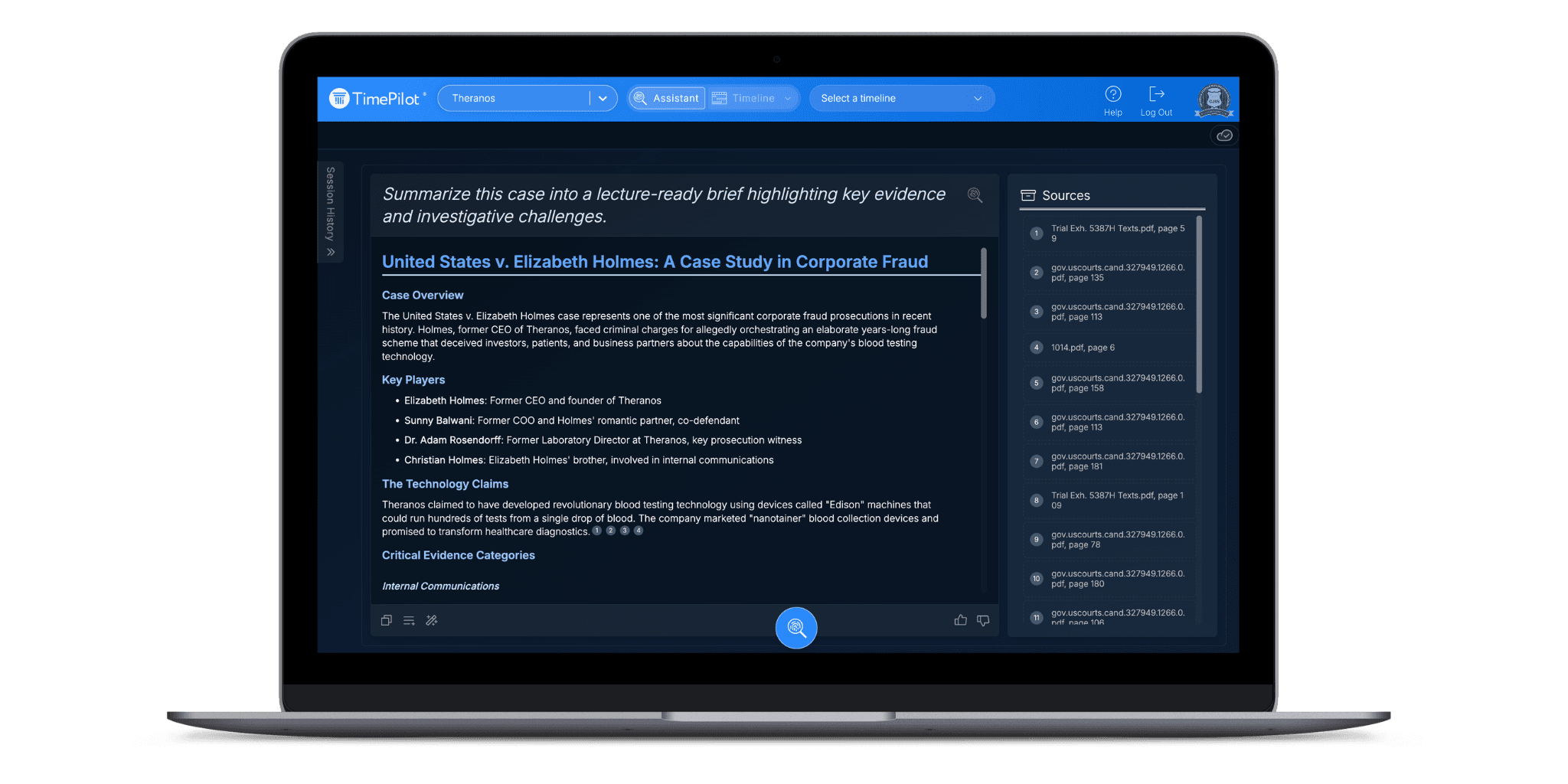
Q: Summarize this case into a lecture-ready brief highlighting key evidence and investigative challenges.
Q: Design three assessments (a short memo, a group exercise, and an exam question) using this case.
Q: Write a hypothetical that changes one key fact in this case and explain how it affects charging decisions.
Q: Map this case to learning objectives on probable cause, chain of custody, and witness credibility.
Q: Create a classroom exercise where students argue this case from both prosecution and defense perspectives.